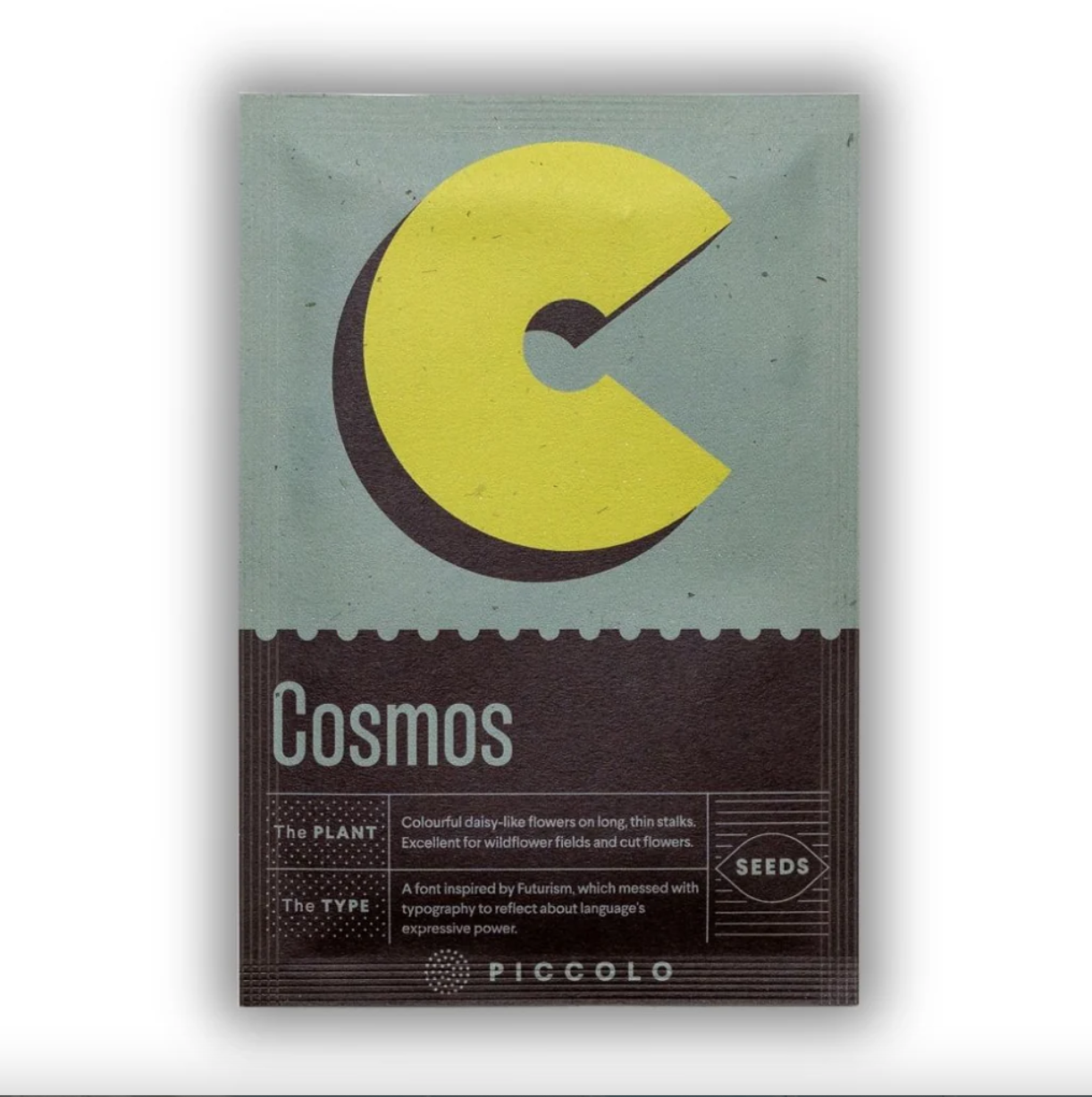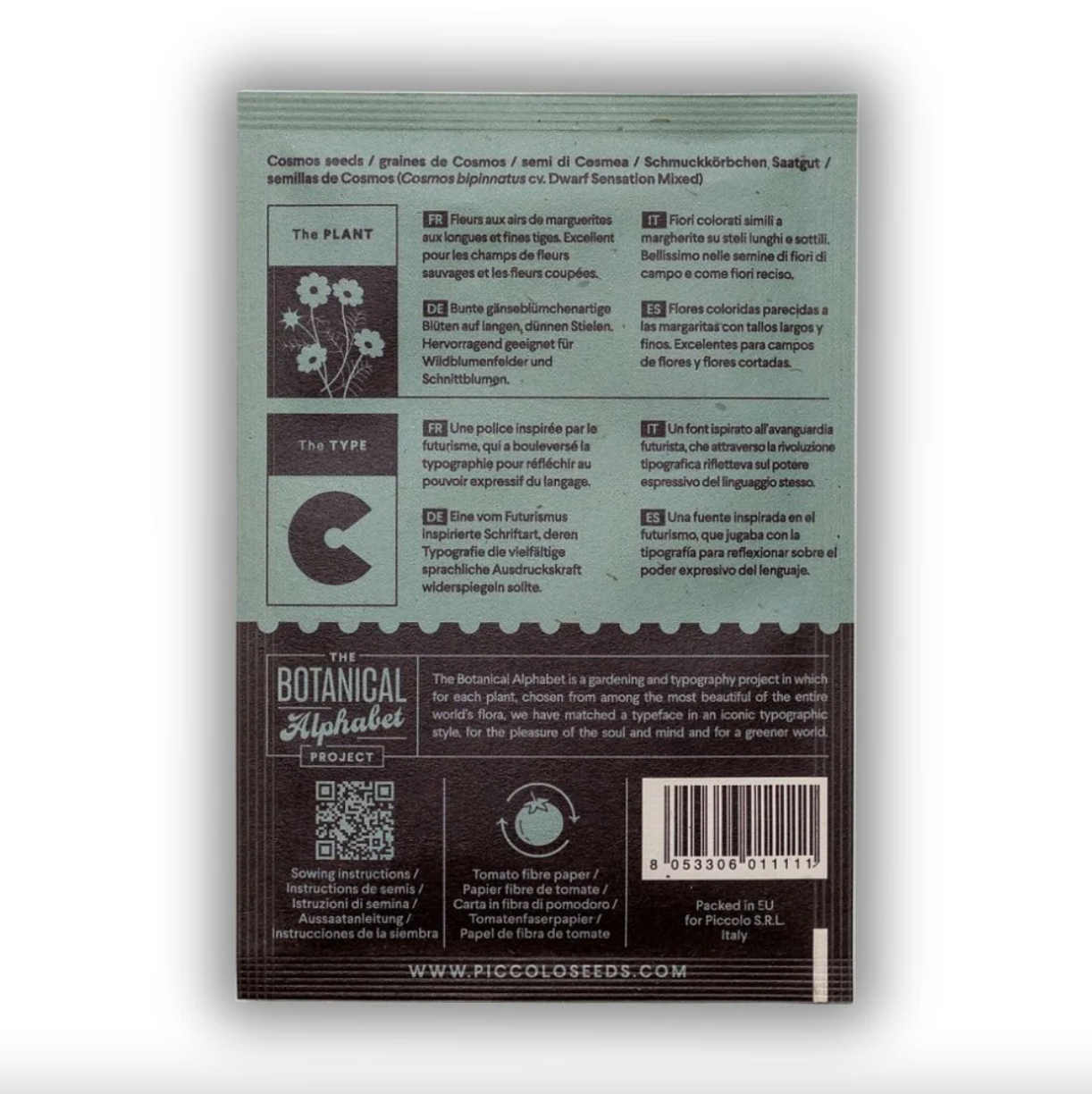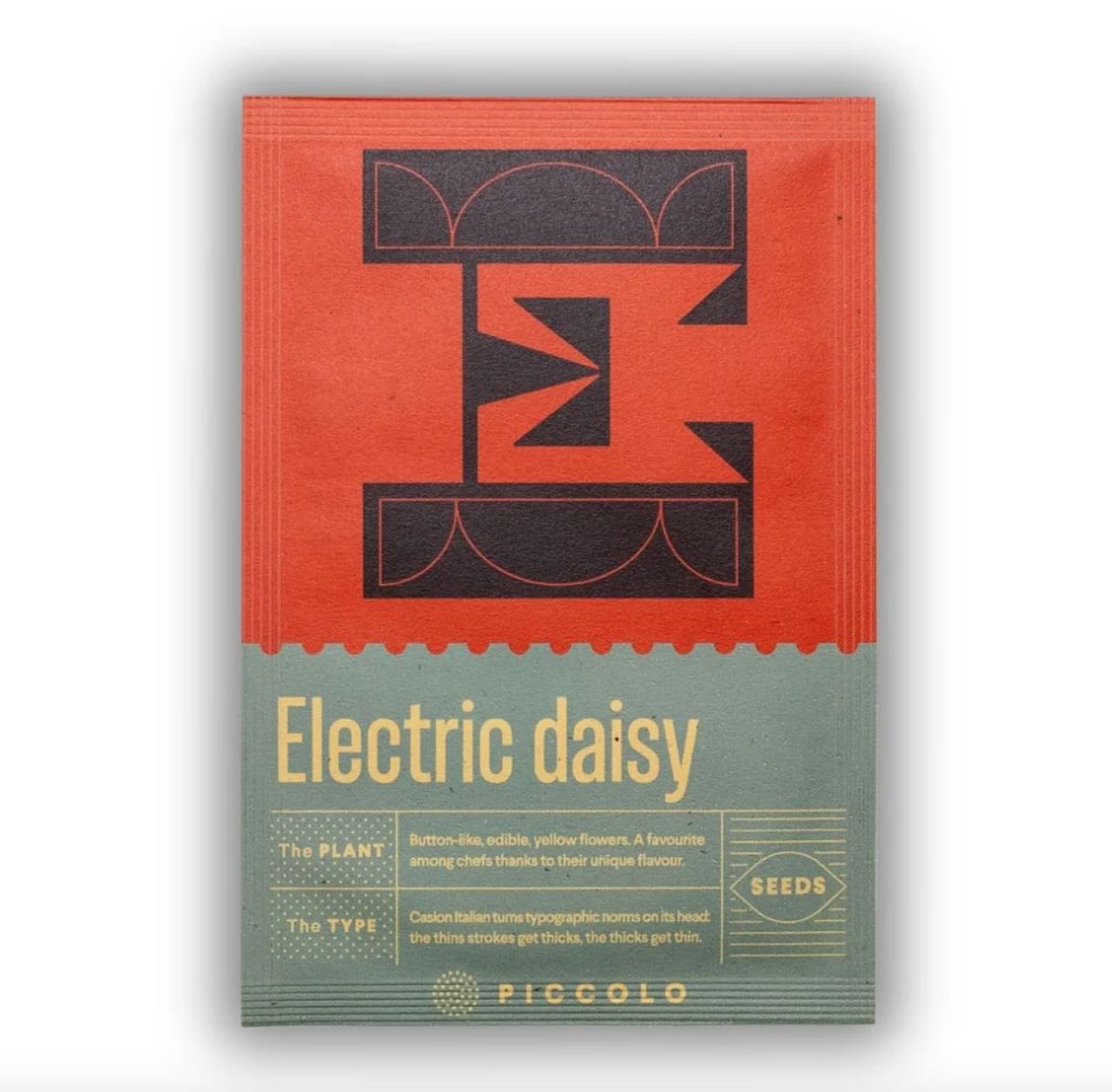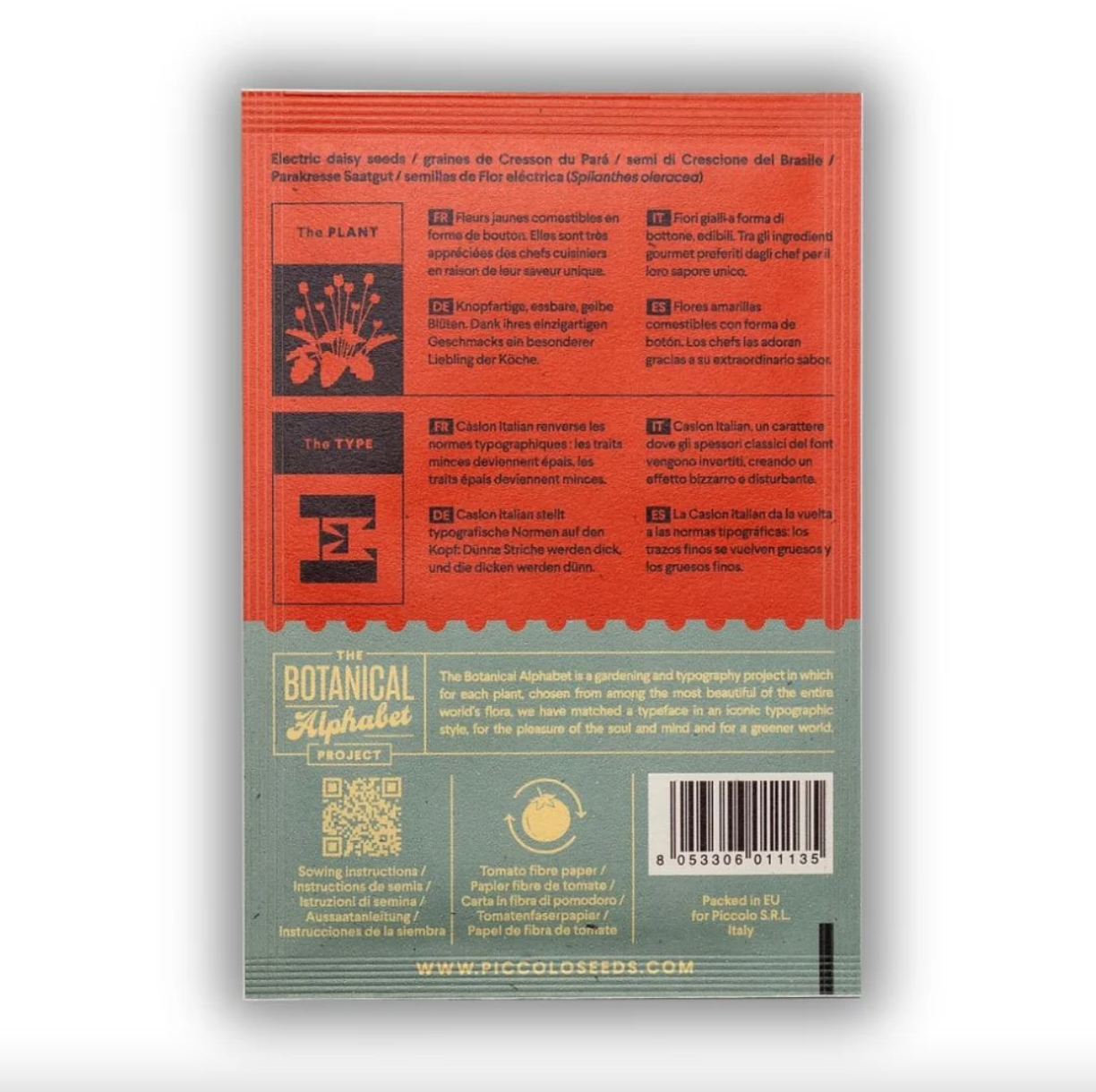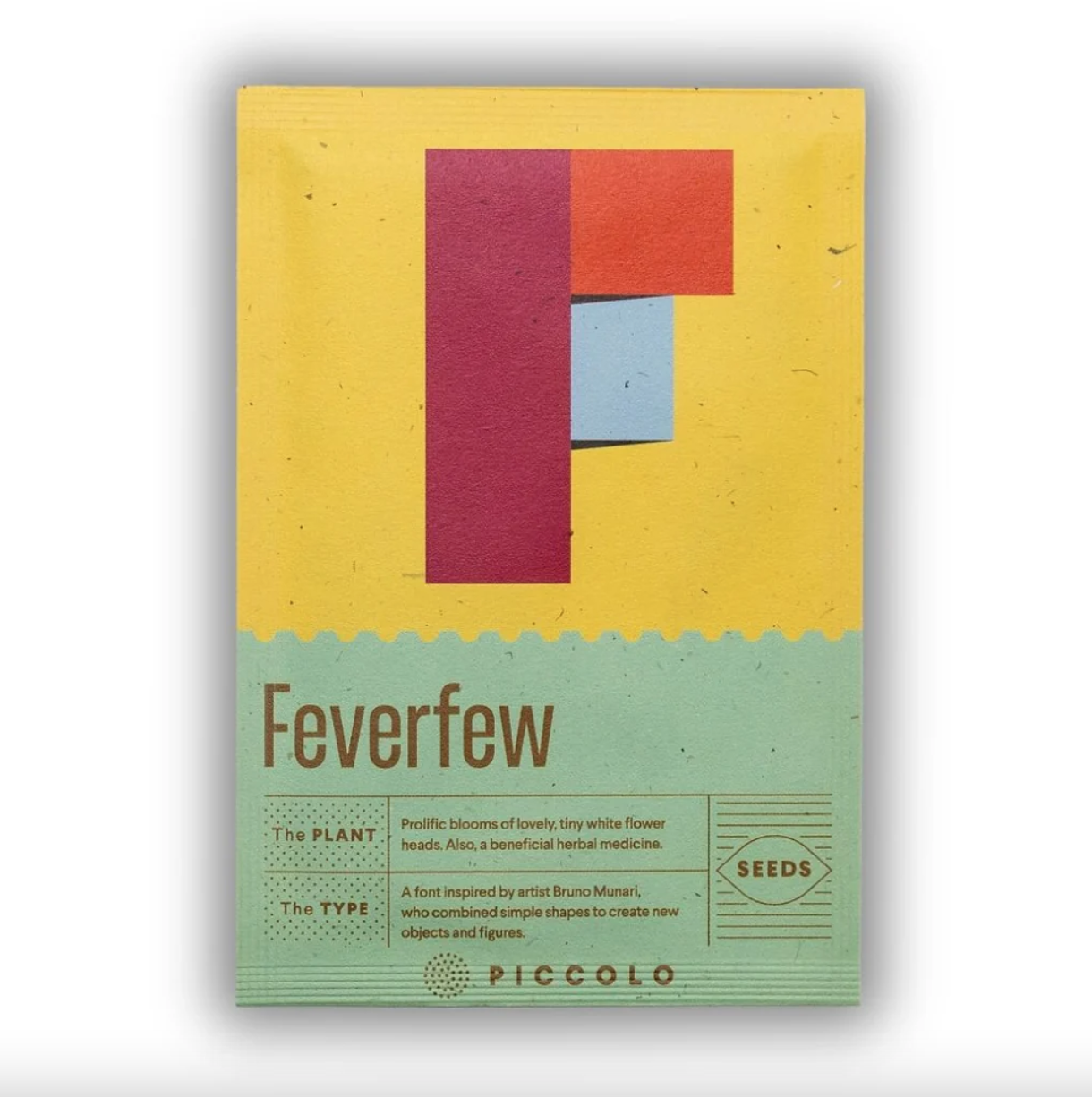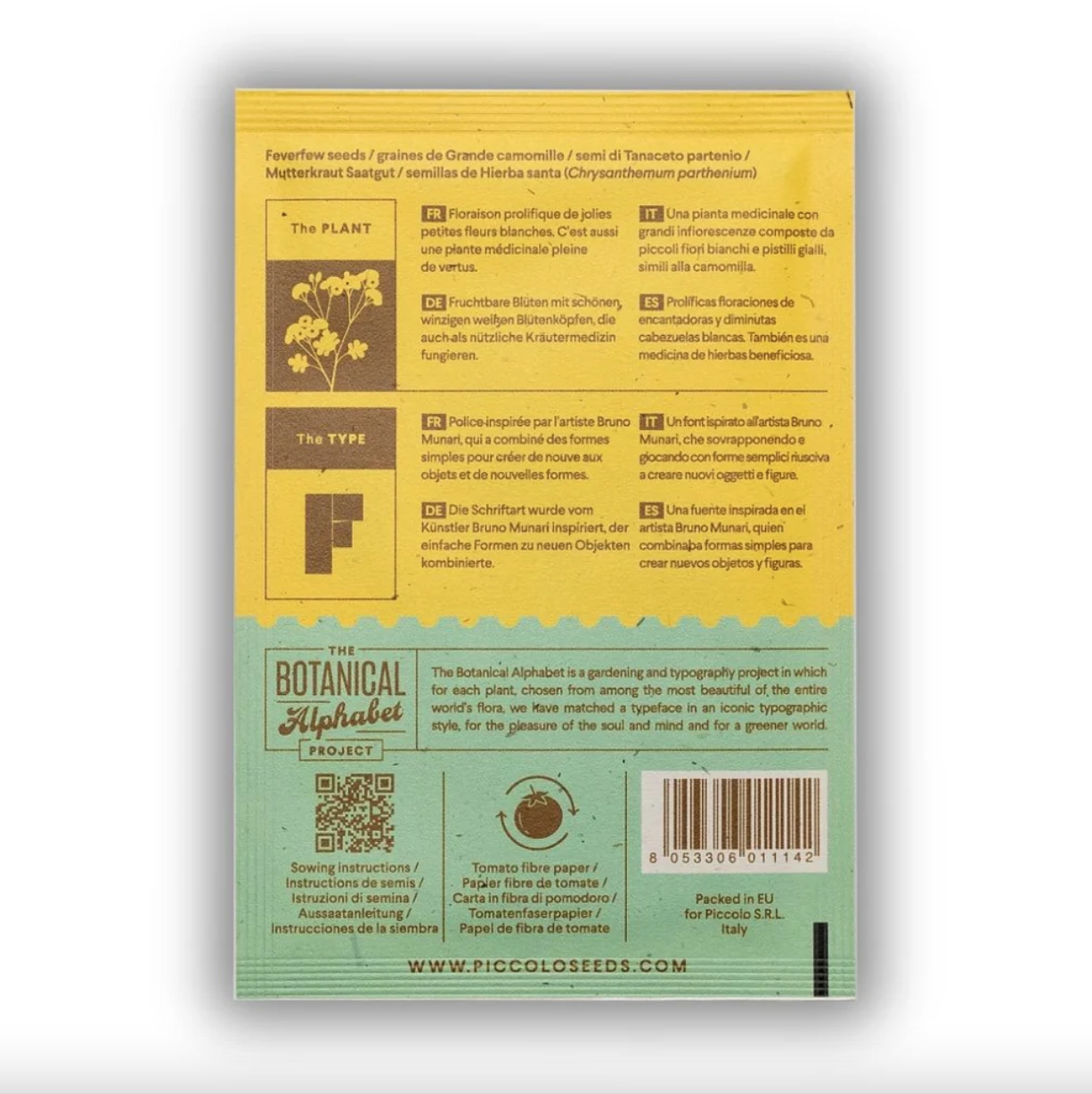
Botanical Alphabet / D - DAHLIA
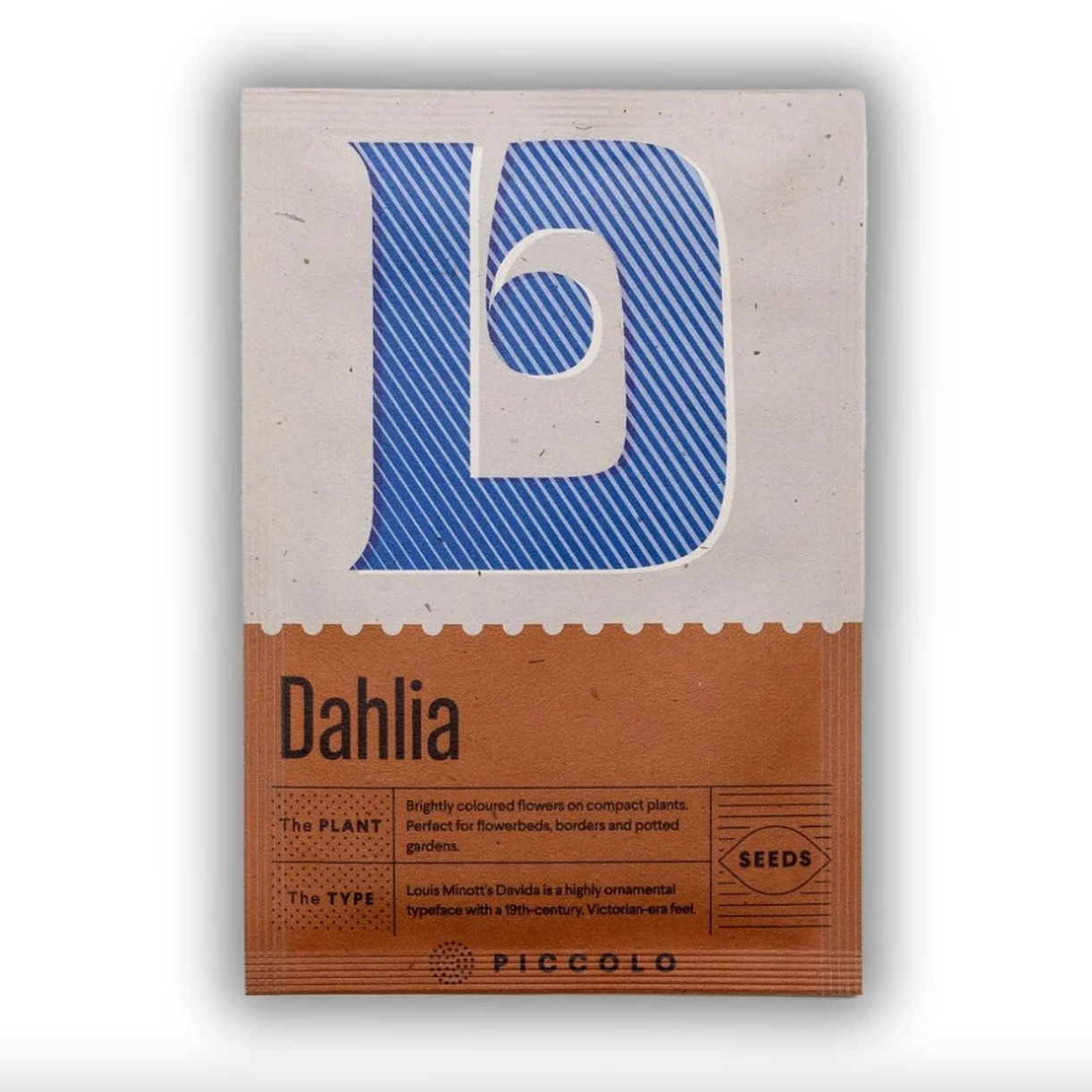
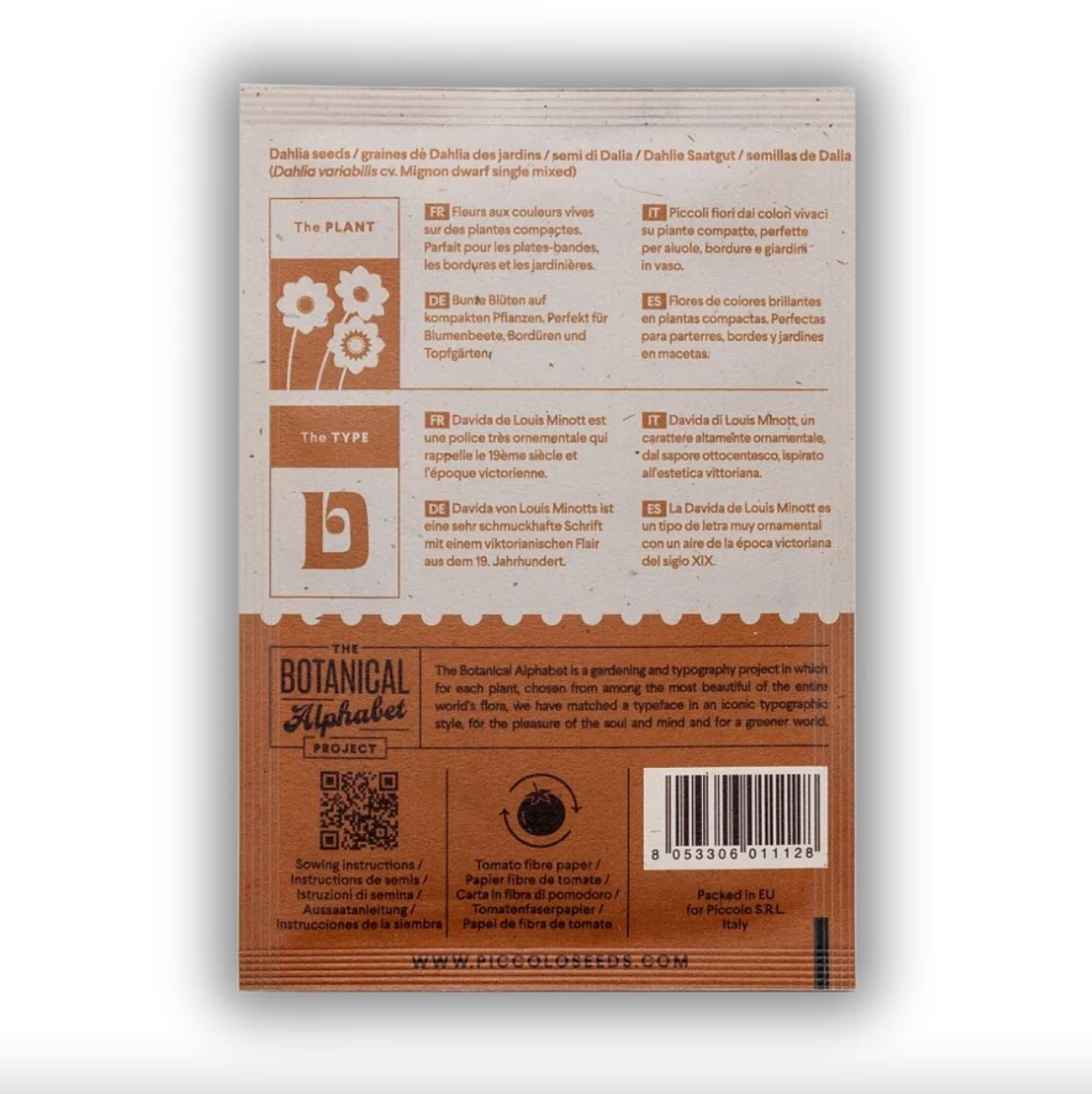
Botanical Alphabet / D - DAHLIA
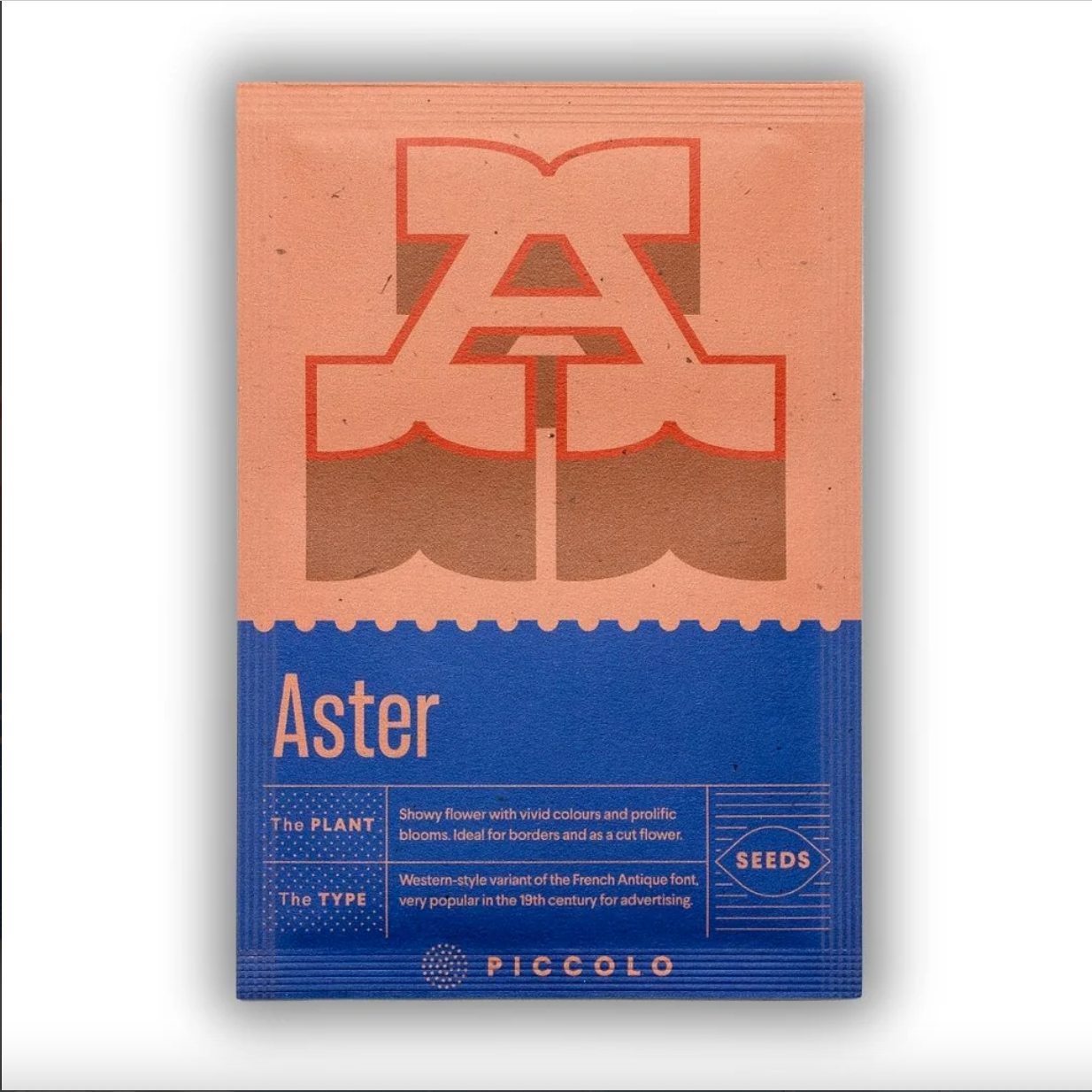
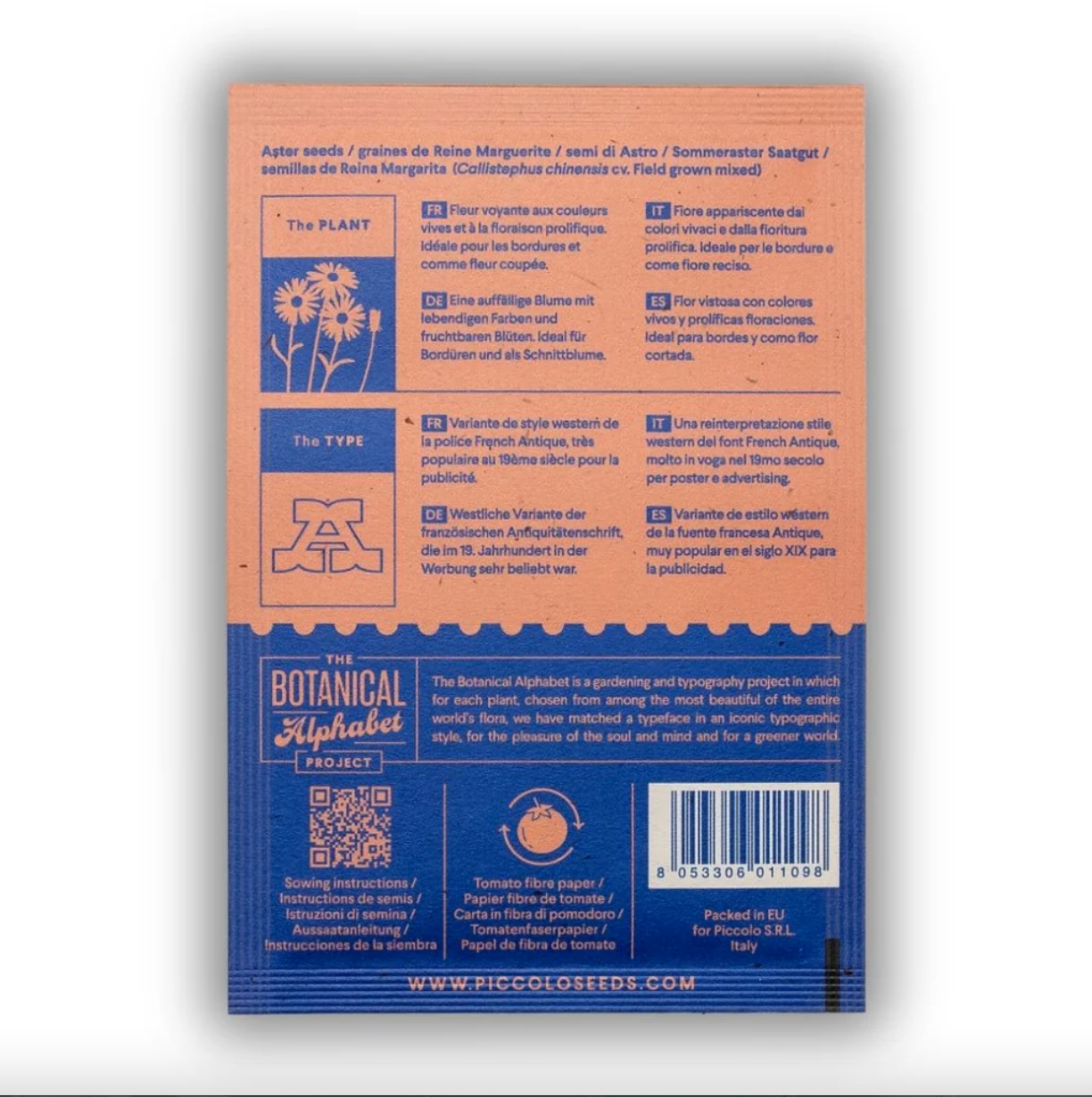
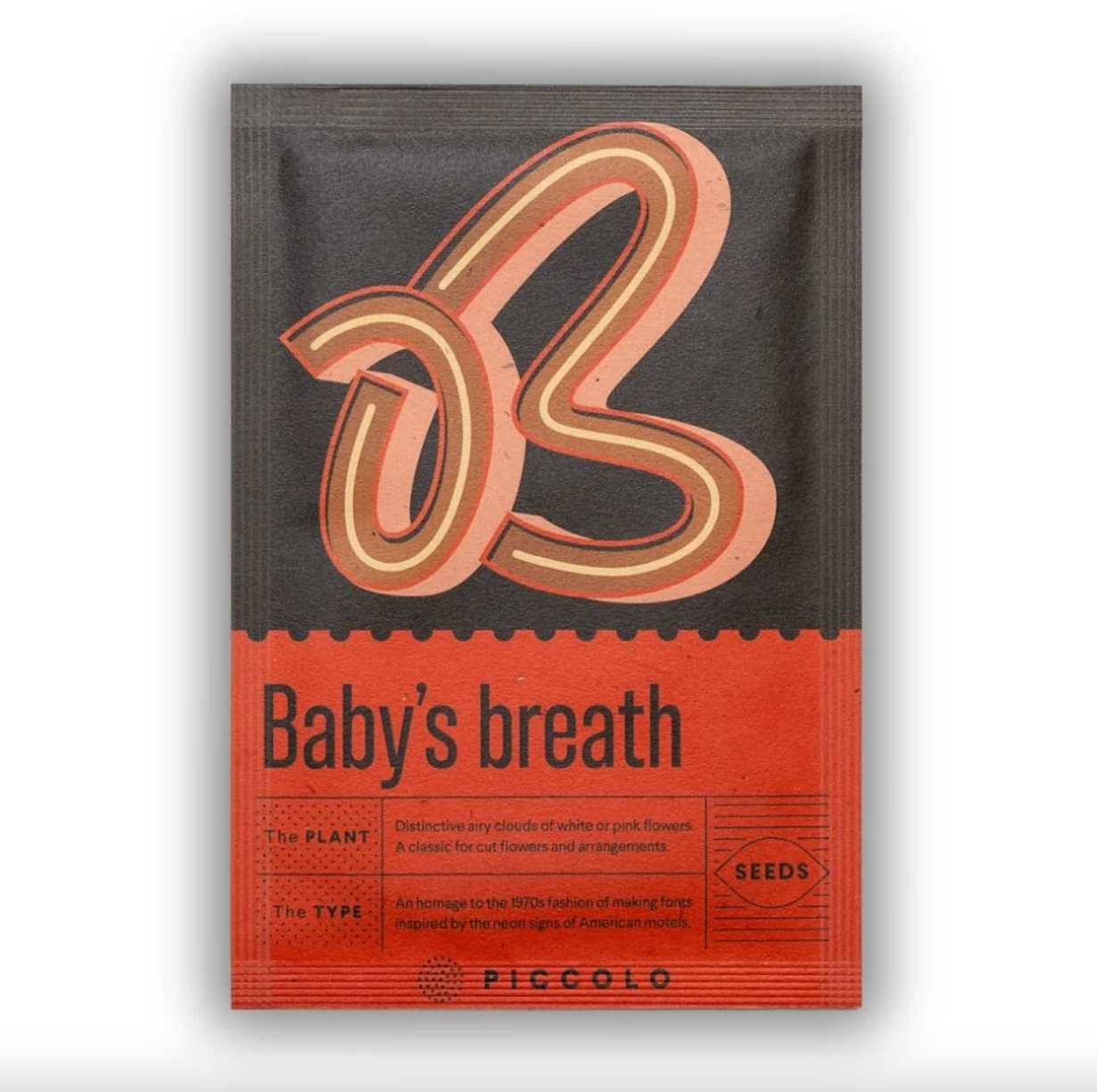
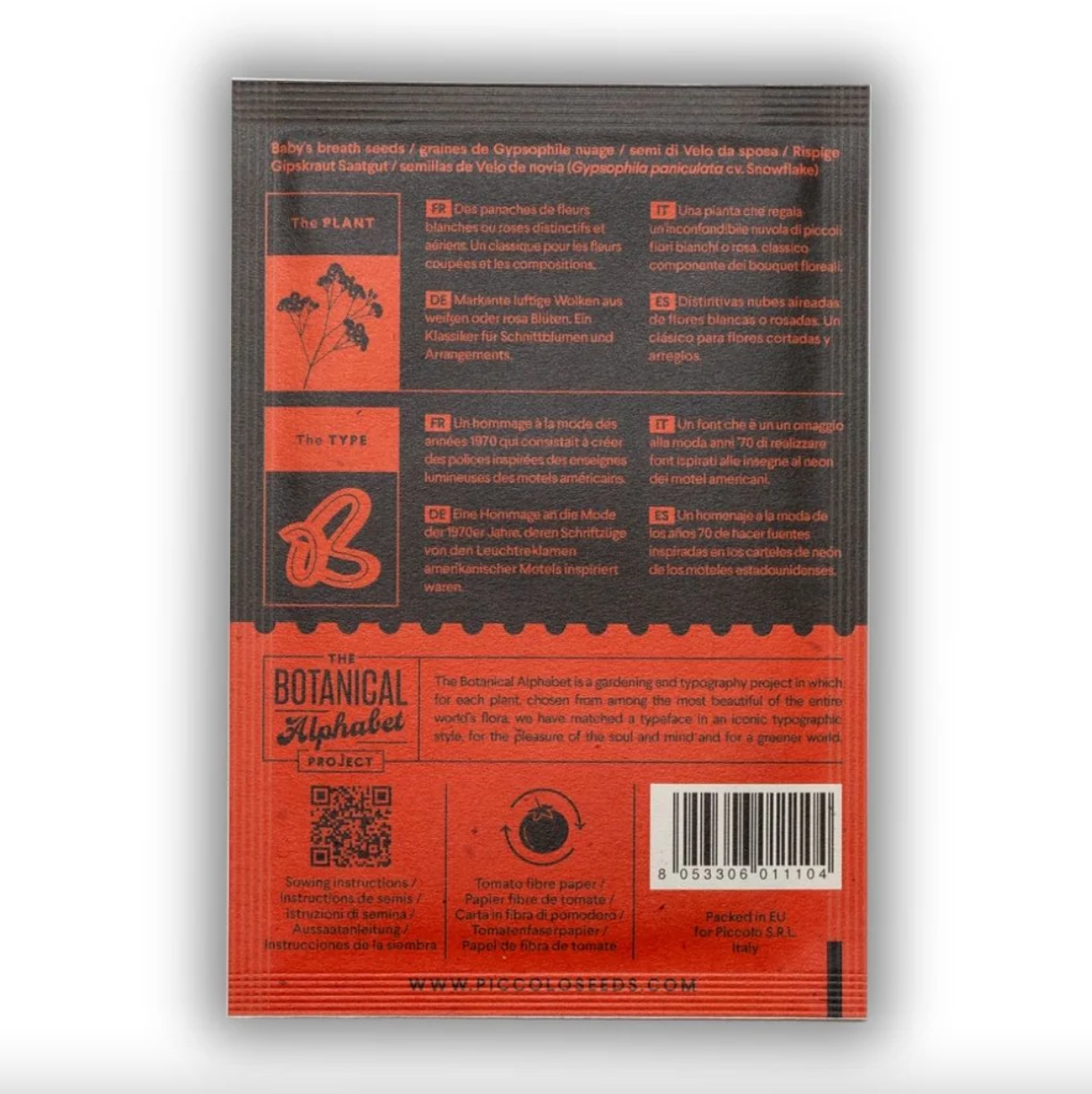
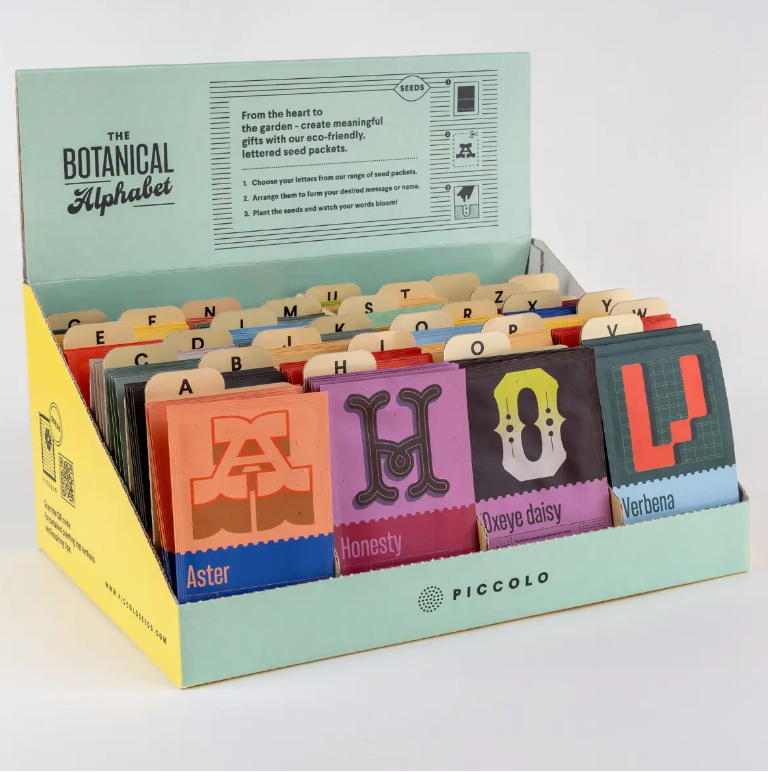
The Botanical Alphabet is a gardening and
typography project in which for each plant,
chosen from among the most beautiful
of the entire world's flora,
we have matched a typeface in an iconic
typographic style, for the pleasure of the soul
and mind and for a greener world.
A brand-new way to combine the joy of gardening
with the art of personal expression.
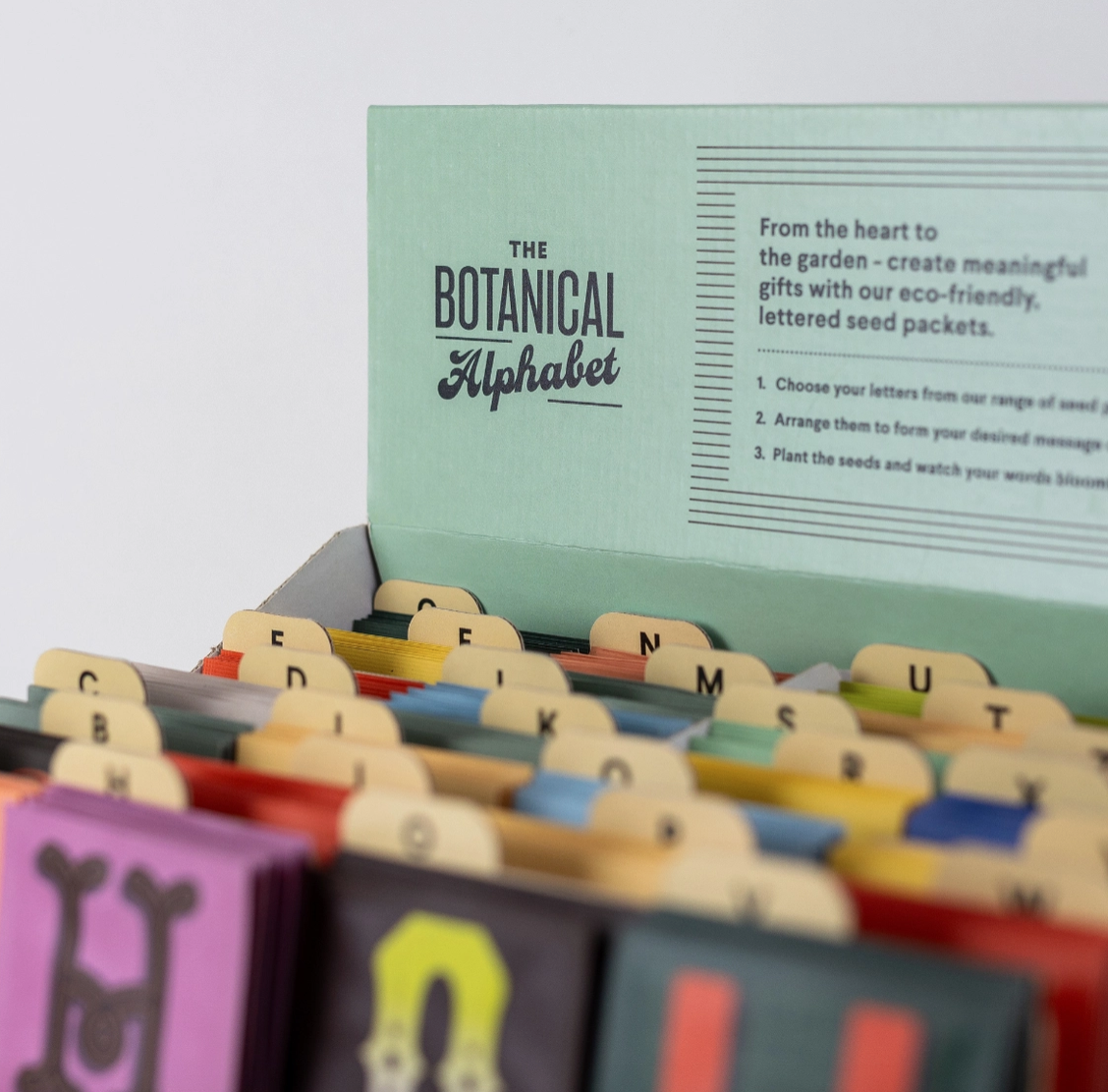
Spell out names, words, or special messages
with the eco-friendly seed packets,
each representing a letter of the alphabet.
D - DAHLIA
THE PLANT
Brightly coloured flowers on compact plants.
Perfect for flowerbeds, borders and potted gardens.
THE TYPE
Louis Minott's Davida is a highly ornamental
typeface with a 19th-century, Victorian-era feel.
Details:
Name: Dahlia
Variety: Mignon dwarf single mixed
Latin name: Dahlia variabilis
Seed quantity: 0,25 grams
Packet size: 9 x12,5 cm
Packet material: Made from paper produced
using tomato waste fibers, it can be disposed
of in biodegradable waste
Plant size: 30-90 cm height, 30-45 cm spread
Container size: Minimum 30 cm diameter
HOW TO GROW
SOWING
Outdoor Late spring, after last frost
Indoor 6-8 weeks before last frost
GERMINATION
Time 7-14 days
Temperature 20-25°C
HOW TO SOW
Direct sow Sow seeds 0.5 cm deep in well-prepared soil
Indoor Sow in trays; cover lightly with soil and keep warm
CARING
Light Full sun to partial shade
Watering Water moderately, keeping soil consistently moist
Soil Rich, well-drained soil with added organic matter
Feeding Fertilize monthly with a balanced fertilizer
GROWING TIP
Pinch back the top growth to encourage a bushier plant.
Dahlias can benefit from staking, especially
taller varieties prone to wind damage.
HARVESTING
Cut blooms when fully open for arrangements.
For longer vase life, cut flowers early in the morning.
INTERESTING FACTS
Fun fact 1
Dahlias were originally cultivated by the
Aztecs and were used as a food source.
Fun fact 2
With over 42 different species, dahlias come
in a wide range of colors, shapes, and sizes,
making them a favorite in gardens and floral arrangements.